It’s one thing to make a frame and another thing entirely to paint one. Talk about a lesson in patience.
Without climate control, a person is at the mercy of mother nature and she seems rarely willing to offer ideal conditions for painting. The winter has been far too cold to paint and though spring has arrived, lingering evening chills remain, which threaten the curing process of painting mediums and grounds. With the approach of summer, soon the extreme heat and humidity will introduce new challenges. So it is that patience is the only way to endure while applying 14 coats, several of which require one to three days for curing.
It’s tempting to just slap on a few coats of paint and call it done, but I wouldn’t learn much in doing so. Additionally, I’d always wonder how much better it could be if I had put in the effort to do it the recommended way.
For those of you interested in painting your own art frames, here’s the approach that I used. I chose to use only Golden products as my paint system to ensure chemical compatibility.
Golden Gac 100
I used two coats of Golden Gac 100 to seal the wood to prevent warping and support-induced discoloration (SID). I waited 24+ hours between coats and I lightly sanded with 220 grit sandpaper after each coat.
Golden Gesso
I used three coats of Golden Gesso. I waited 24+ hours between coats and I sanded with 220 grit sandpaper after each coat.
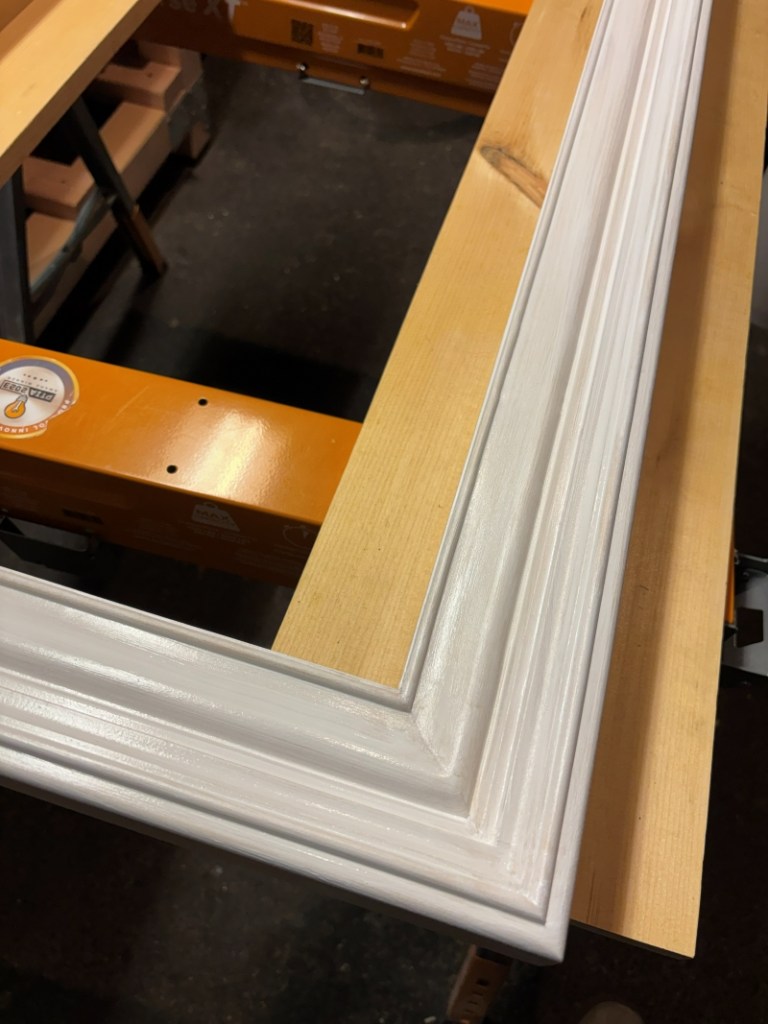
Golden Fluid Acrylics
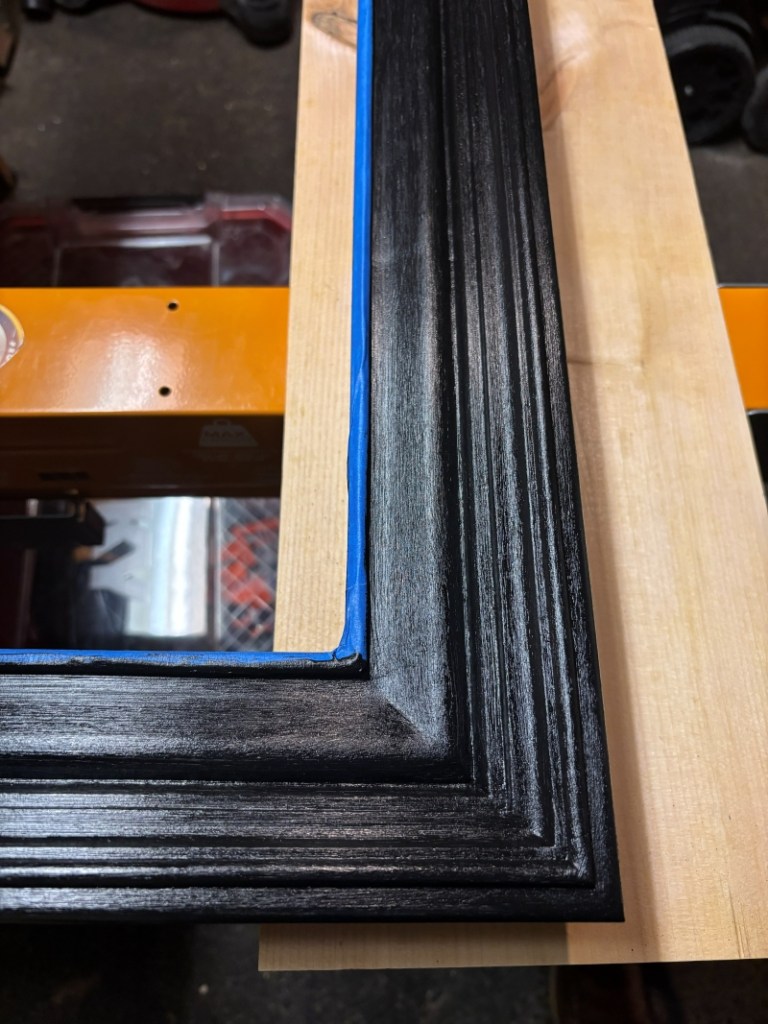
I taped the inner part of the frame (which I wanted to paint gold) with standard blue painters tape and then applied three coats of black paint. I waited 24+ hours between coats and sanded after each coat with 220 grit sandpaper.
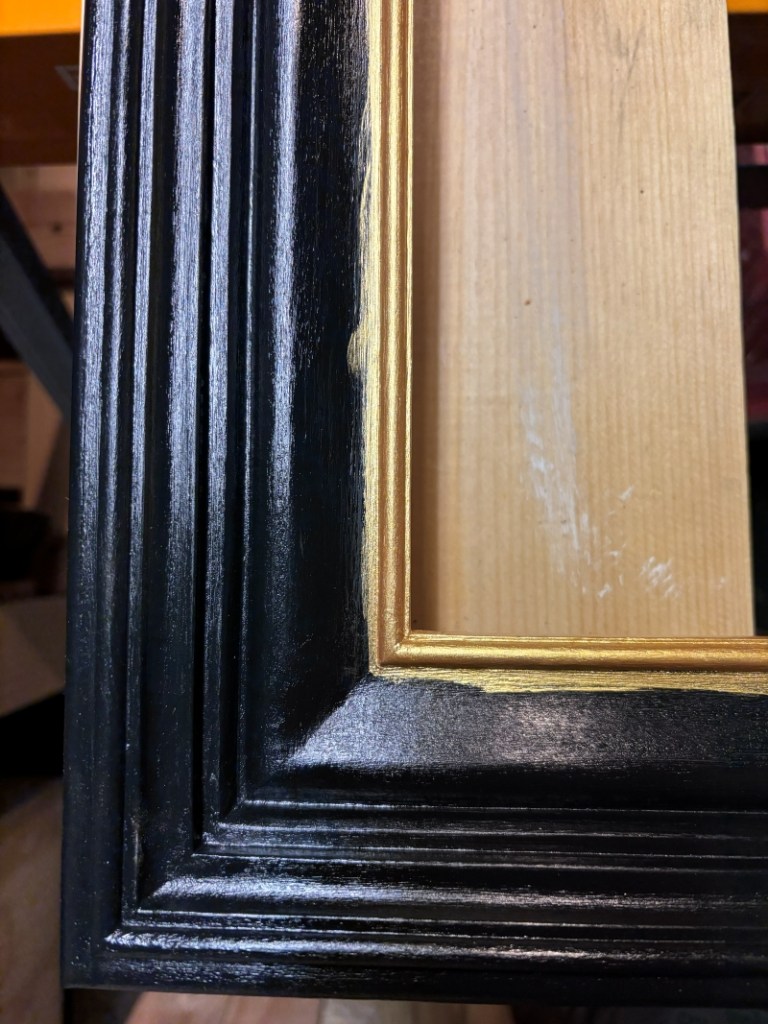
After the black paint cured, I removed the blue painters tape and applied three coats of gold paint to the inner lip/rim of the frame. I sanded lightly with 400 grit between coats, but not after the final coat.
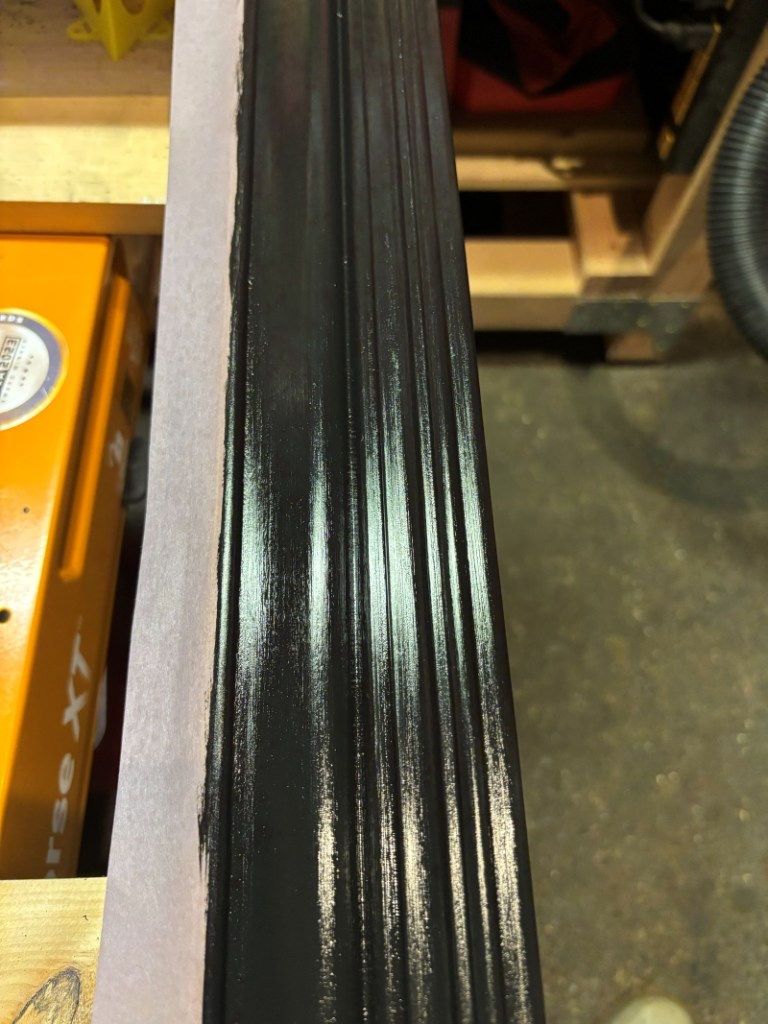
After curing, I applied Scotch Delicate Surface (purple) tape to the inner lip/rim. I then applied two more coats of black paint to the frame, sanding with 400 grit between coats. I used high-quality, fine art, synthetic brushes to minimize brush marks. After curing, I removed the Scotch delicate surface tape. At this point, I stopped sanding.
Golden Isolation Coat
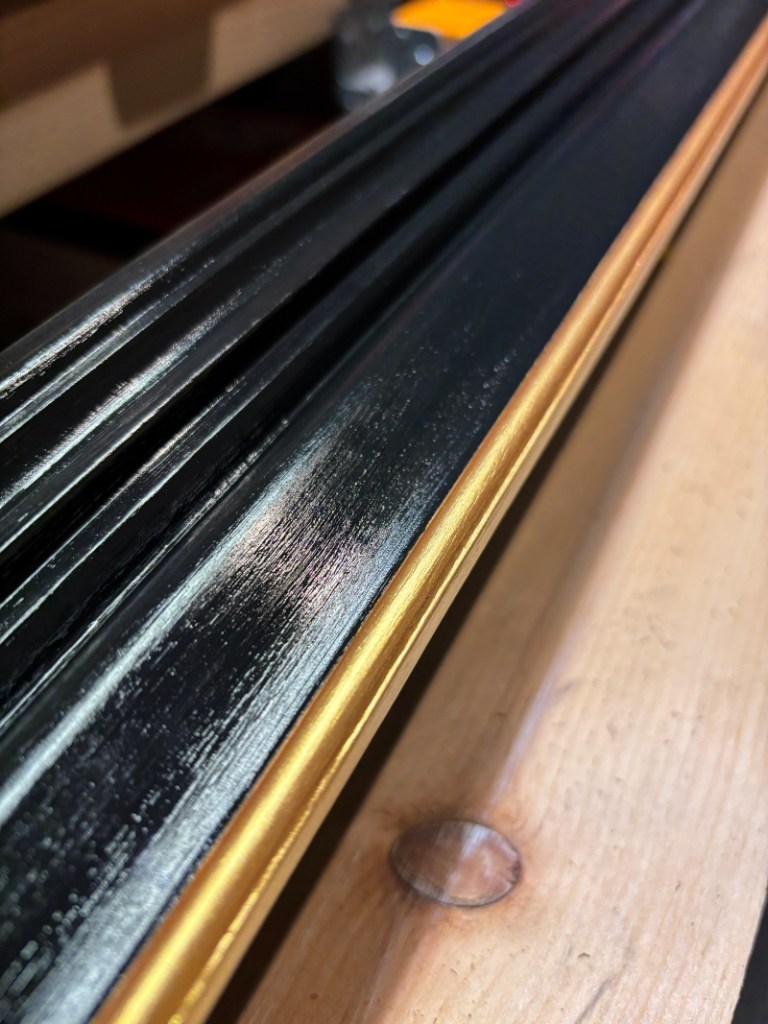
I applied one thin layer of Golden Isolation Coat. Isolation coat is often applied to paintings to ensure that varnish, if or when it yellows over time, can be removed without damaging the underlying acrylic paint. However, it also helps to ensure uniform absorbency of varnish to achieve a uniform sheen, which was my reason for using it. The isolation coat adds a noticeably smoother finish. You can very lightly sand, but I didn’t.
Golden Satin Archival Varnish Spray
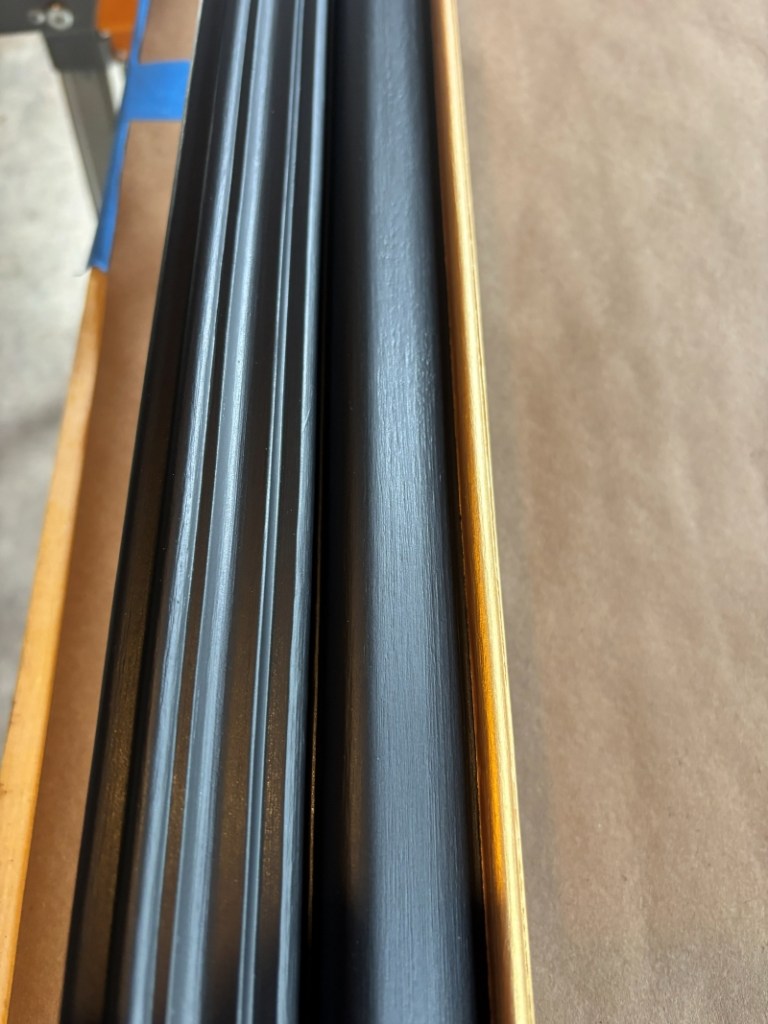
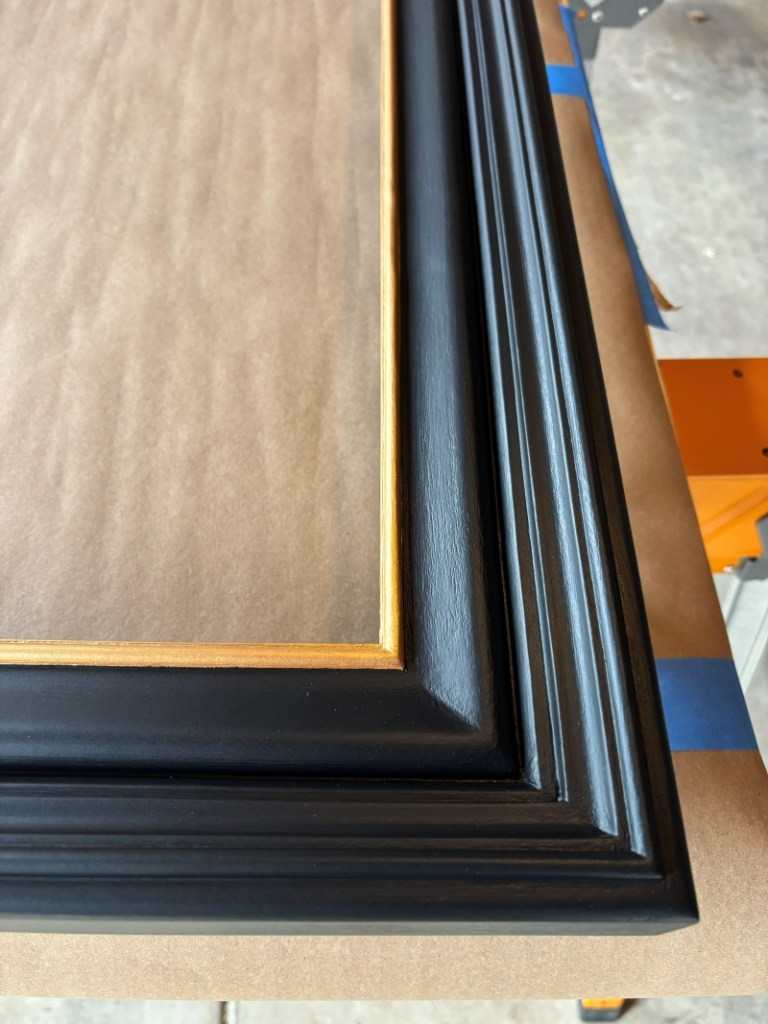
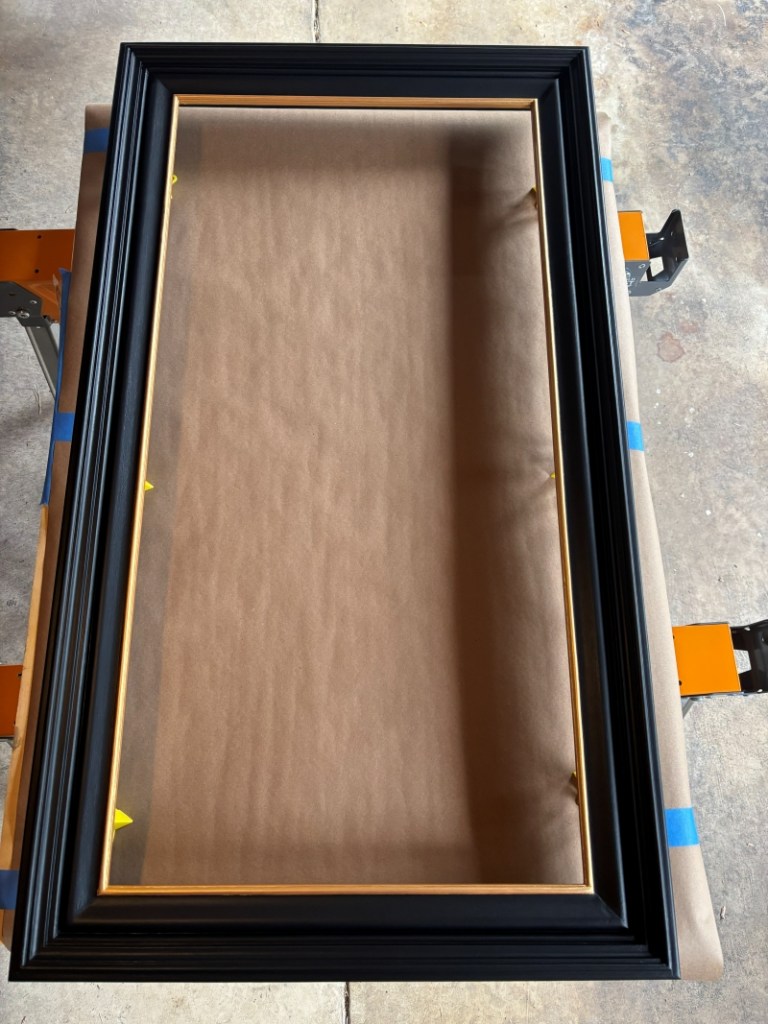
Lastly, I applied three coats of Golden Satin Archival Varnish. I waited an hour between coats and did not sand. I believe you can lightly sand with 400-600 grit sandpaper between coats, but I chose not to. When sanding, I’ve found it is crucial to allow the full curing time (24+ hours) between coats and I didn’t want to take the time to do this, especially when the result was already satisfactory to my eyes.
Lessons Learned
Looking back on this process, there are a few things that I would do differently.
Firstly, I would take the time to sand the wood very smooth with 400-600 grit sandpaper.
Secondly, I would ensure each layer of gac and gesso are very smooth before proceeding.
Thirdly, I would only use high-quality brushes. I initially used low-quality brushes and the brush marks were extreme. High-quality brushes make a huge difference reducing the texture of the brush marks.
Fourthly, I would use the higher grit (400-600) sandpaper earlier on and only use the 220 if needed to reduce brush marks or dust nibs.
Fifthly, I would use a sandable gesso to ease the sanding process.
Lastly, I might use Golden Open Slow-Drying Acrylic Medium or Golden Retarder to slow the drying process. I opted to increase moisture on my brushes, dipping them in water more often. This gave me the time I needed to paint and allowed for a smoother finish, but I’m curious what the result would be using a slow-drying medium or retarder.
Well, that’s all I have for now. If you’ve read this far, I hope you’ve found value in doing so.
Cheers!

